


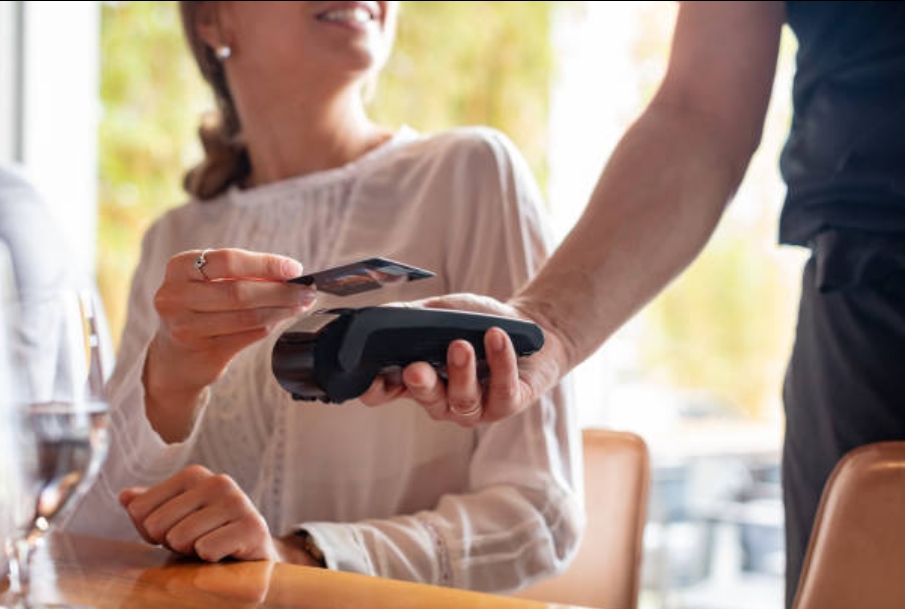
There’s a particular kind of shift that happens quietly, without any single dramatic moment marking the change. Nobody announced the death of the paper business card, and plenty of people still carry a stack of them today. But if you look closely at how professionals actually exchange information now — at conferences, in client meetings, at casual introductions — something has clearly moved. Fewer people are fumbling through wallets looking for a card that might be bent or out of date. More people are simply holding up a phone, or tapping something small against another phone, and moving on with the conversation. That shift is worth paying attention to, not because it’s flashy, but because it reflects something real about how professional relationships are being built and maintained going forward.
Networking Has Always Followed Whatever Technology Made It Easier
It’s worth remembering that the paper business card itself was once a technological shift. Before printed cards became standard, people relied on handwritten introductions, letters of reference, or simply word of mouth passed between trusted contacts. The card was, in its time, a way of making a professional introduction faster, more consistent, and easier to remember. It solved a real problem for the era it existed in.
Digital business cards aren’t really a departure from that pattern — they’re a continuation of it. Just as paper cards replaced slower, less standardized forms of introduction, digital cards are replacing paper for many of the same reasons: they’re faster to use, easier to keep accurate, and better suited to how people already communicate. Seen this way, the “future of networking” isn’t really about technology for its own sake. It’s simply the next practical step in a pattern that’s been playing out for a long time.
Why Paper Cards Are Increasingly Out of Step With How We Actually Work
Most professionals today manage the bulk of their communication and relationships digitally — email, messaging apps, video calls, social platforms. Paper business cards sit a little awkwardly against that backdrop. They’re physical objects in an otherwise digital workflow, which means the information on them almost always needs to be transferred manually into a phone or a CRM system before it becomes useful. That transfer step is exactly the kind of small friction that tends to get eliminated over time, once a better alternative becomes available.
Digital business cards remove that step almost entirely. Because the information is already digital by nature, it moves directly into a phone’s contacts app, or straight into a CRM system, without anyone needing to type it in by hand. In a working world that’s already digital by default, a paper card increasingly feels like an extra, slightly inconvenient step rather than a natural part of the process.
The Information Itself Is Changing, Not Just the Format
One of the more understated reasons digital business cards matter isn’t really about the tap or the technology — it’s about what a professional introduction is actually expected to contain these days. A name, title, and phone number used to be sufficient. Increasingly, people expect to see a portfolio, a LinkedIn profile, recent work, or a way to book time directly, all as part of a first introduction. A paper card was never designed to hold that much, and trying to cram a website address, a QR code, and social handles onto a small printed rectangle usually just makes it harder to read, not more useful.
A digital profile doesn’t have that constraint. It can hold as much or as little as makes sense for a given professional, and it can be restructured or expanded at any point without needing to redesign and reprint anything. As expectations around what a “complete” introduction includes continue to grow, digital formats are simply better suited to keeping up with that shift than a static piece of paper ever could be.
Data Is Becoming Part of How Networking Gets Evaluated
There’s also a broader trend worth noting: more parts of professional life are being measured and evaluated with actual data, rather than gut feeling alone. Marketing has analytics. Sales has pipeline tracking. Even hiring increasingly involves structured data rather than pure instinct. Networking, for a long time, sat outside this trend almost entirely — there was no real way to know whether handing out cards at a particular event actually led anywhere.
Digital business cards quietly bring networking into that same data-informed pattern. Being able to see how many people engaged with your card after an event, or which of your links people found most interesting, doesn’t replace the human side of networking, but it does add a layer of feedback that simply didn’t exist before. As more professionals get used to having this kind of visibility in other parts of their work, it’s a natural expectation to extend to networking as well.
Consistency Matters More as Teams and Companies Scale
As businesses grow, maintaining a consistent, professional image across every employee becomes harder to manage through paper cards alone. Reprinting materials for a growing team, keeping branding aligned, and ensuring nobody is handing out an outdated design all become genuine logistical concerns once a company moves beyond a handful of people. Digital business cards, particularly those managed through a shared company system, solve this in a way that scales naturally — updates apply instantly across an entire team, and consistency doesn’t depend on someone manually tracking who has the latest printed batch.
This matters for the future of networking specifically because businesses are only going to keep growing more distributed, with remote teams, hybrid offices, and employees meeting clients and partners in more varied settings than before. A system that keeps everyone consistent without constant manual oversight fits that reality far better than a box of cards sitting in a supply closet.
Sustainability Is a Quiet but Growing Factor
It would be an overstatement to say sustainability is the main driver behind digital business cards, but it’s becoming an increasingly relevant consideration for many businesses and individuals. A significant number of printed business cards are discarded shortly after being handed out, and multiplied across every professional who reorders cards every time a detail changes, the waste adds up over time. As more businesses factor sustainability into decisions that used to be made purely on cost or convenience, a reusable digital alternative fits naturally into that broader shift, even for people who aren’t specifically motivated by environmental concerns.
Networking Itself Isn’t Becoming Less Human, Just Less Manual
There’s sometimes a worry that adding technology to something as personal as networking risks making it feel colder or more transactional. In practice, the opposite tends to be true. Because a digital card removes the mechanical parts of an exchange — writing things down, typing details in later, worrying about running out of cards — it actually frees people up to focus more on the conversation itself, rather than the logistics surrounding it. The future of networking, in that sense, isn’t about replacing human connection with technology; it’s about removing the small frictions that used to get in the way of it.
What This Means for Professionals Going Forward
For individual professionals, this shift suggests that adopting a digital business card sooner rather than later isn’t just about staying current for its own sake — it’s about aligning with how information exchange is increasingly expected to work. As more people become accustomed to tapping or scanning rather than manually collecting paper cards, showing up with only a paper option can start to feel like a small step behind, in the same way that not having an email address once did.
For businesses, the shift points toward needing systems that can manage this at scale, rather than treating it as an individual choice each employee makes on their own. As digital cards become a more standard part of professional identity, having a consistent, centrally managed approach across an entire team will likely matter as much as having a consistent website or consistent branding materials already does.
Frequently Asked Questions
Are paper business cards going to disappear completely? Probably not entirely, at least not in the near term. Some people and industries will likely continue using them alongside digital options, but their role is clearly shrinking as digital alternatives handle the same job more efficiently.
Is this shift being driven mainly by younger professionals? It’s more common among younger professionals so far, but the appeal isn’t really generational — the practical benefits, like easier updates and better data, matter regardless of age, and adoption tends to follow once people actually try it rather than being tied strictly to how old they are.
Do digital business cards require a big shift in how someone networks? Not really. The core behavior — introducing yourself and sharing your information — stays exactly the same. Only the mechanics of that exchange change, which is part of why adoption has been fairly smooth for most people.
Is this trend specific to certain industries, or is it happening everywhere? It’s happening broadly, though adoption is faster in industries where networking volume is high, such as sales, real estate, consulting, and events-heavy fields, and a bit slower in more traditional or conservative sectors.
What’s the biggest reason this shift is likely to continue? Largely because it removes friction from something people already do constantly, without asking them to change their underlying behavior. Technology shifts that fit naturally into existing habits tend to stick, and this one fits that pattern closely.
Final Thoughts
The future of networking isn’t defined by any single flashy feature of digital business cards — it’s shaped by a series of small, practical improvements that add up over time: less manual work, easier updates, better consistency at scale, and a bit of real data where there used to be none at all. None of this changes what networking is fundamentally about, which is still building genuine professional relationships. What’s changing is simply how much friction sits between meeting someone and actually staying connected with them afterward, and that friction is quietly disappearing, one tap at a time.